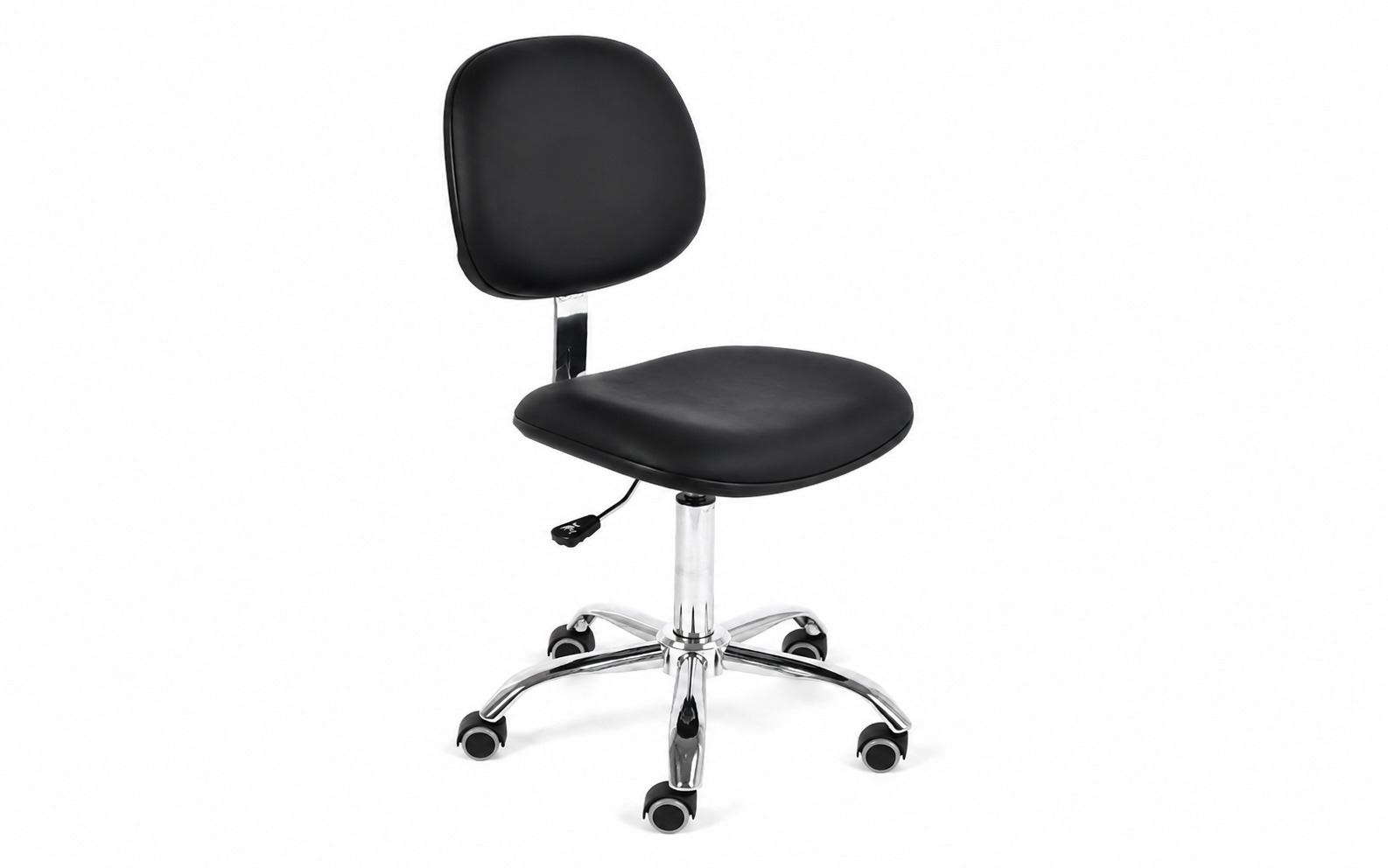
Companies in Argentina can choose laboratory chair supply models suitable for long-term cooperation by first segmenting demand according to site type, purchasing frequency, operational criticality, and regional complexity. A single supply model rarely works equally well for a pharmaceutical headquarters, a university laboratory, a food-testing branch, a hospital network, and a mining operation located far from major logistics hubs. Buyers should classify each location into service tiers such as strategic high-volume sites, predictable replacement sites, project-based expansion sites, and low-frequency regional sites. Each tier can then receive a different supply arrangement. Strategic sites may justify reserved production capacity, fixed configuration records, and scheduled call-off orders, while low-frequency sites may be served through project releases or distributor stock. When an industrial polyurethane with chrome foot ring and casters adjustable laboratory chair is selected for a recurring high-bench application, the supply model should define how many units are forecast annually, which components are standardized, what minimum stock is held, and how quickly urgent replacements can be delivered. Argentine distributors can help by creating a demand architecture that links each customer site to an approved configuration, expected order pattern, and service priority. Volume bands should also be built into the agreement so pricing, lead time, and support improve as annual demand becomes more predictable. This makes the relationship commercially fair for both parties: buyers receive better continuity and distributors gain clearer visibility for purchasing, inventory, and supplier planning. Instead of using one rigid contract, companies can create a modular supply framework in which each site follows a model suited to its operating reality. This reduces overstock, prevents under-service, and gives procurement teams a more accurate basis for long-term planning across Argentina.
A second factor is the definition of service levels and digital replenishment rules. Long-term cooperation becomes more efficient when the buyer and distributor agree not only on product price but also on how orders are triggered, confirmed, tracked, and replenished. Companies should decide whether demand will be released through purchase orders, scheduled forecasts, digital portals, automatic stock alerts, or agreed reorder points. For an industrial polyurethane with chrome foot ring and casters adjustable laboratory chair, the digital record should preserve the exact seat, lift, chrome ring, base, caster type, room category, service history, and compatible spare parts so repeat orders can be processed without restarting the technical review. Argentine distributors can offer customer-specific catalogs or account dashboards that display approved models, contract pricing, current availability, lead times, and open orders. This reduces administrative work and prevents unauthorized substitutions. Service levels should be tiered as well. A strategic corporate account may require same-day acknowledgment, weekly order visibility, priority technical support, and local replacement stock, while a project customer may need milestone reporting and coordinated delivery by room. The agreement should state who owns inventory, how slow-moving stock is reviewed, what happens when forecasts change, and how emergency requests are handled. Buyers should also define service credits, escalation routes, and recovery actions for repeated failures, but incentives can be included when the distributor consistently exceeds on-time delivery, documentation accuracy, or service-response targets. By combining digital replenishment with clear service standards, companies can reduce transaction cost, improve order accuracy, and make the supply relationship easier to scale across multiple locations and departments.
The third factor is the creation of a partnership evolution model that allows cooperation to deepen when performance is proven. Many companies choose a supply model once and leave it unchanged, even when demand grows, new regions are added, or supplier capability improves. A more effective approach uses defined maturity stages. The relationship may begin with controlled project orders, move to approved-supplier status after successful delivery, then progress to regional stock support, annual framework planning, or strategic partnership when performance remains strong. If an industrial polyurethane with chrome foot ring and casters adjustable laboratory chair becomes widely used across Argentine sites, the partnership can evolve to include reserved components, regional service kits, user training, configuration audits, and joint expansion planning. Buyers should review performance through indicators such as forecast accuracy, repeat-order consistency, response speed, on-time-in-full delivery, defect rate, service closure, and cost variance. Distributors should also be evaluated on how well they support account growth, not only on unit price. A partner that identifies upcoming laboratory projects, maintains accurate records, and helps standardize configurations may create more long-term value than one that offers a temporary discount. Governance meetings can be scheduled quarterly to review demand, service, pricing, risks, and improvement opportunities, while an annual strategic review decides whether the relationship should remain at the current level, expand, or be restructured. Original Google-friendly content about long-term laboratory chair supply models, service tiers, digital replenishment, multi-site procurement, and partnership maturity can help distributors attract corporate buyers looking for dependable cooperation. By segmenting demand, defining service levels, digitizing repeat ordering, and creating a clear partnership upgrade path, companies in Argentina can choose supply models that remain flexible, measurable, and capable of supporting long-term B2B growth.
READ MORE